
Text candidates back before they cool off
A recruiter workflow for replying to candidate texts in minutes at volume - built on one shared conversational inbox that never lets a warm reply go cold.
30-day free trial. No setup fees, no long-term contracts.
Replying fast is a workflow problem, not a willpower one
Recruiters know they should answer candidates faster. The trouble is that at real volume, "try to reply quicker" is not a plan. When hundreds of texts land across a team, the fast reply becomes a matter of who happens to be looking at their phone - and luck does not scale.
The teams that win the speed race do not work harder. They decide in advance who owns the inbox, when they check it, what gets answered first, and what a machine handles so a human never has to. Below is that workflow, step by step, built on ATS Mako's two-way conversational inbox, automations, and template library. Set the trigger, and the rest runs.
A candidate reply is a countdown
The window between a candidate texting back and losing interest is short. Speed is how you stay in the conversation.
A candidate reply is a countdown, not a to-do
When an applicant texts back, they are actively thinking about your job right now. That window closes fast. Treating replies as a queue you clear at the end of the day means you answer people who have already moved on. The reply is a live conversation, and it decays by the minute.
At volume, memory and inbox-refreshing lose
One recruiter watching one phone can chase a handful of candidates. A team fielding hundreds of inbound texts cannot rely on who happens to glance at their screen. Without a shared system, fast replies become luck, and luck does not scale.
Speed reads as respect before the interview
A reply that lands in minutes tells a candidate you are organized and you want them. A reply that lands tomorrow tells them the opposite, next to the four employers who answered first. Your response time is the first real impression your process makes.
The fix is a workflow, and workflows can be built
Being faster is not about trying harder. It is about deciding in advance who owns the inbox, when they check it, what gets answered first, and what a machine handles so a human never has to. Set the trigger, and the rest runs.
Six steps to reply in minutes at scale
Run this every shift. Automation covers the instant replies, and a shared inbox with reply sprints covers the human ones.
- 1
Let automation answer the instant they apply
Before a recruiter touches anything, a status-triggered text confirms the application the second it lands. That first touch buys you the window. The candidate hears from you at peak intent, and your team is now replying to a warm conversation instead of starting a cold one.
- 2
Work from one shared conversational inbox
Every candidate reply, SMS and email, lands in one centralized two-way inbox that the whole team can see. No replies stranded on a personal cell, no thread hidden in someone else vacation. If it is in the inbox, anyone on shift can own it.
- 3
Block your day into reply sprints
Do not leave the inbox open all day, half-answering between tasks. Set fixed reply sprints - the top of every hour, plus a scan at the start and end of shift - and clear the newest, warmest threads first. Deep work gets protected, and no reply waits more than an hour for a human.
- 4
Answer with templates, not from scratch
Speed dies when every reply is typed fresh. Preloaded and custom templates with merge fields like first name and interview time let a recruiter send a personalized, on-brand answer in seconds. Update the template once and it deploys everywhere.
- 5
Route the warm threads first with live signals
Real-time engagement tracking flags who just opened, clicked, or replied. Sort the inbox by recency and intent so recruiters spend their sprint on candidates leaning in right now, not scrolling past them to chase a cold name from Tuesday.
- 6
Hand off cleanly, never drop a thread
When a shift ends or a candidate needs a specialist, the conversation moves inside the inbox with full history attached. The next recruiter picks up mid-conversation without asking the candidate to repeat themselves.
What to answer first when the inbox is full
Not every thread is equal. Sort by intent, and let automation clear the predictable so humans stay on the warm.
Live, high-intent replies
A candidate who just texted a question, confirmed availability, or said yes to a screen. They are in the conversation this minute. Reply before you do anything else - these are the threads that turn into hires.
Warm but waiting
Replies from the last hour that need a real answer or a scheduling link. Clear them inside your current reply sprint so no warm candidate waits past 60 minutes for a human.
Predictable, repeatable
Application confirmations, reminder nudges, and no-reply follow-ups should never touch a recruiter. A conditional sequence handles them, fires only when needed, and stops the moment the candidate answers.
Low urgency
General questions from candidates already scheduled, or non-time-sensitive updates. Group them into the end-of-sprint pass so they never interrupt a live conversation.
One inbox, one clear voice
Speed across a team breaks down when nobody owns the thread. These three rules keep the whole team fast without stepping on each other.
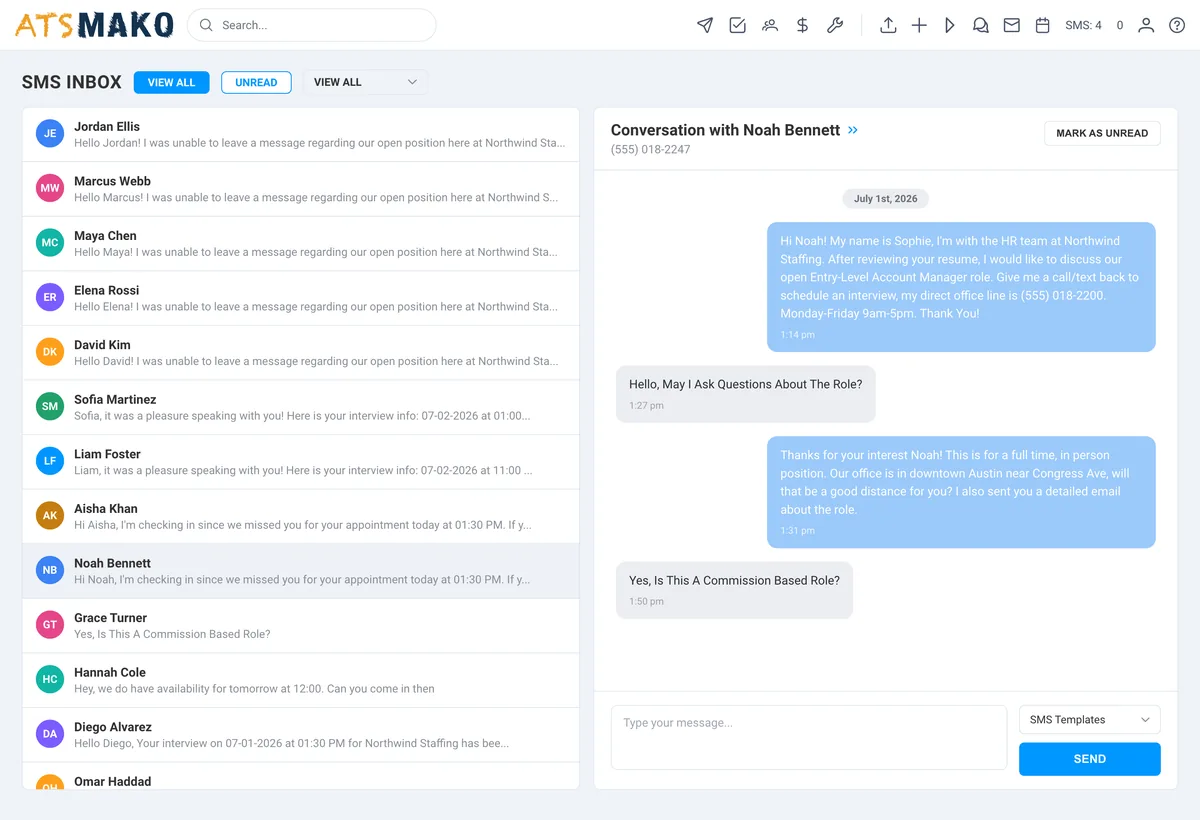
Someone owns the inbox every hour you accept texts
Assign inbox coverage the way you assign phones. There is always a recruiter on point for live replies during business hours, so an inbound text never sits unclaimed while everyone assumes someone else has it.
A recruiter claims a thread before they reply
Claiming a conversation prevents two people answering the same candidate with two different messages. The thread is visibly owned, the rest of the team routes around it, and the candidate gets one clear voice.
Complex threads move, they do not stall
If a candidate needs a manager, a different location, or a specialist, hand the thread over inside the inbox with history intact. Speed is not just first reply - it is never letting a conversation dead-end.
Guardrails that keep you fast and compliant
Concrete targets, not promises. These keep the worst-case wait short while respecting the candidate and the rules.
Automated first touch inside the first minute
The confirmation text should fire the second the application posts, day or night, queued to business hours. That is the one reply you never have to be awake for, and it is the one that matters most.
Human reply inside the hour, in your sprint
Aim to have a person answer every live thread within your current reply sprint. Hourly sprints keep the worst-case wait to about an hour while protecting recruiters from a constantly pinging inbox.
Send inside business hours, always
Quiet-hours protection queues texts to local business hours. It respects the candidate, keeps you compliant, and lands your message when it can actually be read and answered.
Follow up once, only when silent
A conditional nudge a day later recovers real interest without nagging. It fires only when there is no reply and stops the instant the candidate responds.
Outbound recruiting texts in the US are governed by the TCPA. Capture lawful prior consent, keep a clear opt-out such as "Reply STOP" on messages, and let business-hours-only sending and automatic opt-out handling protect the candidate and your firm.
Set the trigger. We handle the rest.
Give every recruiter one shared conversational inbox, automated first touches, and templates that reply in seconds. Designed for speed. Built for scale.
Full feature access. No setup fees, no long-term contracts.
Recruiter speed-to-reply FAQs
How fast should a recruiter reply to a candidate text?
Treat the automated first touch as instant - a status-triggered confirmation should fire the moment an application lands, queued to business hours. For a human reply, aim to answer every live thread inside your current reply sprint, ideally within the hour. The core idea is simple: a candidate who just texted is at peak intent, and every hour of silence hands them to a faster competitor. You do not need every recruiter glued to a phone; you need automation covering the instant reply and a shared inbox with hourly sprints covering the human ones.
What is a reply sprint and why not just leave the inbox open all day?
A reply sprint is a fixed, short window - for example the top of every hour, plus a scan at the start and end of a shift - where a recruiter clears the newest, warmest threads. Leaving the inbox open all day sounds faster but actually makes recruiters slower and more error-prone: they half-answer between tasks, get pulled out of focused work, and still miss threads. Sprints cap the worst-case wait at about an hour, protect deep work, and make sure the warmest conversations always get answered first.
How do you reply fast across a whole team without messages getting missed or duplicated?
Use a centralized two-way conversational inbox where every SMS and email reply from every candidate lands in one hub the whole team can see. Assign inbox coverage for every business hour, have recruiters claim a thread before replying so two people never answer the same candidate, and hand off complex threads inside the inbox with full history attached. Nothing lives on a personal cell phone, so nothing disappears when someone is out.
How do templates make replies faster without sounding robotic?
Preloaded and custom templates with dynamic merge fields - first name, position, interview time - let a recruiter send a personalized, on-brand answer in seconds instead of typing from scratch. Because you update a template once and it deploys everywhere, the whole team stays consistent, and lockable legal and equal-opportunity sections stay intact. Recruiters spend their time on judgment calls, not retyping the same confirmation for the hundredth time.
Is texting candidates at speed compliant?
It can be, when speed is built on the right guardrails. Outbound recruiting texts in the US are governed by the TCPA, which means you need lawful prior consent and a clear opt-out such as "Reply STOP" on messages. Business-hours-only sending and automatic opt-out handling protect both the candidate and your firm. Fast does not mean reckless - the workflow that replies in minutes is the same one that captures consent, honors quiet hours, and keeps unsubscribe handling intact.
Does answering faster actually help if I still have to screen everyone?
Yes, because speed and screening are different jobs and the platform runs both. A fast, automated first touch keeps candidates warm while AI candidate ranking and resume scoring surface the best fits, and optional AI voice screening qualifies applicants around the clock. Your recruiters reply fast to the warm, high-intent threads while the system does the sorting - so speed does not create a pile of unscreened noise, it creates a pipeline you can actually work.