
Skip to content
ATS Mako
2026 Pricing Guide

What Does an ATS Really Cost?

A clear 2026 breakdown of ATS pricing models, per-seat vs. volume, setup fees, and hidden costs - so you budget with confidence and pick the right plan.

No setup fees. No long-term contracts. 30-day free trial.

The short answer

Most teams spend $100 to $500 a month - the number depends on you

ATS pricing swings widely because vendors bundle features, users, and communication differently. For small to mid-size recruiting teams, a modern all-in-one platform typically runs between roughly $100 and $500 per month. This guide shows exactly what drives that number, which fees hide below the sticker price, and how to compare quotes fairly before you commit.

Pricing models

Four ways vendors price an ATS

Know the model before you read the number. Each one behaves differently as your team and hiring volume change.

01

Per-Seat (Per-User) Pricing

The most common model. You pay a monthly or annual fee for every recruiter, coordinator, or hiring manager who logs in. It is simple to reason about and scales cleanly with a stable team, but it can punish growth: add three recruiters for a busy season and your bill jumps whether or not you fill more roles. Watch for plans that bill per seat and cap the useful features behind higher tiers, so you pay for users and pay again for the tools they need.
02

Volume / Usage-Based Pricing

Priced against how much you actually do: number of active jobs, candidates processed, SMS segments sent, or AI minutes used. This fits high-volume and seasonal hiring because cost tracks activity, not headcount. The trade-off is predictability - a spike in applications or a mass text campaign can push you into overage charges. The best plans bundle a generous usage allowance (for example a monthly SMS pool) so normal recruiting never triggers a surprise line item.

03

Flat-Rate / Tiered Bundles

A fixed monthly price for a bundle of users plus a defined set of features. This is the friendliest model for budgeting because you know your number up front and it does not move with a good month. ATS Mako uses this approach - each plan covers a set number of users and a clear feature set with no per-seat metering inside the tier. You scale by moving up a plan when you outgrow one, not by watching a meter.

04

Enterprise / Custom Contracts

For large TA teams and platforms, pricing is negotiated: custom user counts, dedicated support, SSO, security review, and white-label requirements all factor in. Custom does not have to mean opaque. Ask for the components of the quote in writing - platform fee, per-user cost, implementation, support tier, and any usage overages - so you can compare it against a published-price alternative line by line.

A real 2026 example

What flat-rate ATS pricing actually looks like

ATS Mako publishes its plans openly - a fixed monthly price, a clear user cap, and no per-seat metering inside each tier. Every plan includes a 30-day free trial, with no setup fees and no long-term contracts.

Reef Shark

$149 /mo
Up to 5 users
  • Bulk resume upload
  • Automated and unlimited emails
  • Unlimited templates
  • Interactive calendar and scheduling
  • Customizable job offers
  • Employee onboarding and management
  • Task management and customized reporting
See full plan
Most Popular

Tiger Shark

$299 /mo
Up to 10 users
  • Everything in Reef Shark
  • Real-time 2-way SMS (10,000 SMS/mo)
  • AI applicant ranking
  • Dedicated branded applicant site
  • Resume ingest by unique emails
See full plan

Great White Shark

Custom
Enterprise scale
  • Everything in Tiger Shark
  • AI voice and call screening (1,000 AI voice minutes)
  • Mass AI call campaigns
  • White-glove implementation
  • Dedicated account management and priority support
See full plan

Pricing shown reflects published 2026 plans. Confirm current details on the pricing page.

Below the sticker price

The hidden costs that inflate an ATS bill

The monthly subscription is rarely the whole story. Interrogate every vendor on these six line items before you sign.

Setup and implementation fees

Watch for: Many legacy ATS vendors charge a one-time implementation fee that can equal or exceed a year of subscription, sometimes buried as a mandatory "onboarding package."

With ATS Mako: ATS Mako charges no setup fees. Guided onboarding is included, and staffing teams get dedicated onboarding at no extra line item.

Long-term contracts

Watch for: Annual or multi-year lock-ins with steep early-termination penalties are common. You commit before you know whether the tool fits your workflow.

With ATS Mako: No long-term contracts. Every plan starts with a 30-day free trial with full feature access, so you evaluate before you commit.

Per-message and communication add-ons

Watch for: SMS, email, and voice are frequently sold as separate products or metered add-ons on top of the base ATS price. The sticker price rarely includes them.

With ATS Mako: Communication is the core of the platform, not an add-on. Tiger Shark includes a 10,000 SMS/mo pool; automated email is unlimited.

Migration and data-import costs

Watch for: Moving your candidate data off a spreadsheet or old ATS can carry a professional-services charge, or be quoted separately from the subscription.

With ATS Mako: Seamless migration from your current ATS is part of onboarding, not a surprise invoice.

Support and training tiers

Watch for: Basic support is often self-serve only, with real human help gated behind a premium support plan billed per year.

With ATS Mako: Free support and guided onboarding are included. Enterprise clients get priority support and dedicated account management.

Tool sprawl you still have to buy

Watch for: A low ATS price can be a false economy if you still pay for texting, email, a scheduler, a resume parser, and reporting separately. Nine logins, nine bills, none of them talk to each other.

With ATS Mako: ATS Mako consolidates roughly nine disconnected recruiting tools into one platform, so the subscription is closer to your true all-in cost.

Build your number

Four factors that decide what you pay

Before you read a single quote, know which of these apply to you. They are the difference between a base plan and a premium tier.

  1. 1

    Team size

    How many people log in

    In a per-seat world this is your primary cost lever. In a tiered model like ATS Mako, you pick the plan whose user cap fits your team - five users on Reef Shark, up to ten on Tiger Shark - and you are not metered inside it.

  2. 2

    Hiring volume

    Candidates and messages per month

    High-volume and seasonal hiring pushes usage-based costs up. Look for included allowances - a monthly SMS pool and unlimited email mean routine recruiting activity does not generate overage charges.

  3. 3

    Feature depth

    SMS, AI ranking, voice, white-label

    Two-way SMS, AI candidate ranking, AI voice screening, and full white-label branding are the features that move price the most. Decide which you actually need before comparing quotes, because they are the difference between a base plan and a premium tier.

  4. 4

    Support and onboarding

    Implementation and account management

    Dedicated onboarding, white-glove implementation, and priority support add value at scale. Confirm whether they are included or billed separately - with ATS Mako, guided onboarding and free support are included by default.

The true all-in cost

A cheap ATS is expensive when you buy nine tools

Nine logins. Nine bills. Zero of them talk to each other. A low base price is a false economy the moment you add texting, email, a scheduler, job boards, a resume parser, onboarding, and reporting as separate products.

ATS Mako replaces roughly nine disconnected recruiting tools with one white-label platform - so the subscription you pay is far closer to your real all-in cost. Communication is the core, not an add-on, and every touchpoint reinforces your brand, not ours.

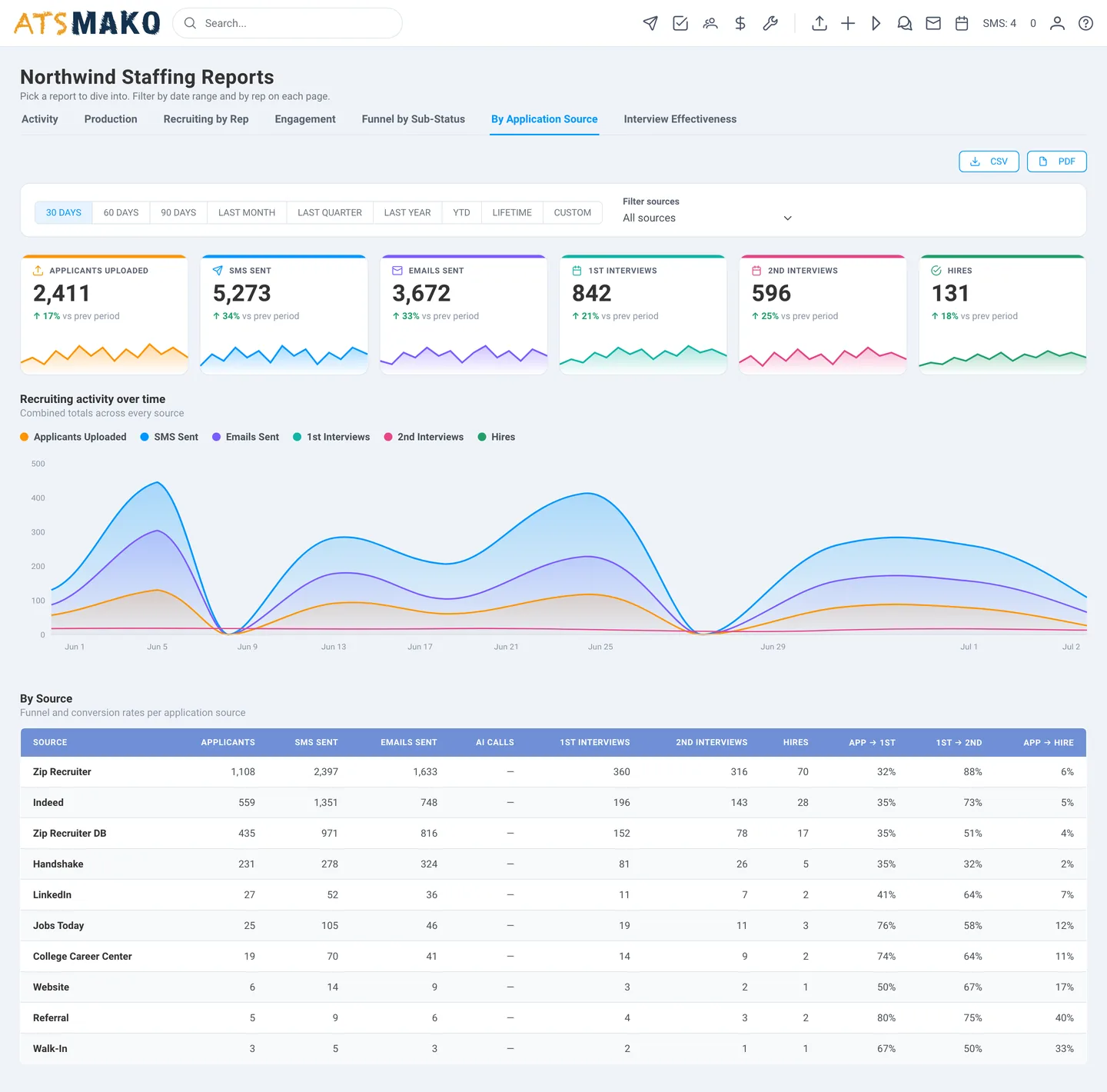
ATS Mako reporting dashboard showing consolidated recruiting metrics in one platform
Buyer's rubric

What transparent ATS pricing actually looks like

Vet any ATS quote against these six signals before you sign - it is a different lens than the hidden-cost list above.

  • A public starting price you can see without a sales call
  • No setup or implementation fee
  • No long-term contract or seat minimum required to start
  • SMS and email included as the core, not billed as add-ons
  • Scheduling, inbox, and reporting in the same subscription
  • Free support and guided onboarding, not a paid tier

Teams that stopped stacking tools

"The MAKO team listened to the recruiting needs for our ICLs and created a program that is second to none. We now have extremely efficient and effective processes with a development team that continues to provide us with updates and impeccable service."
Shanda, Veritas
"The service is already great and is being improved daily to fit our exact recruiting needs. The support the Mako team provides is next to none. Extremely fast to respond and very willing to listen to and implement any suggestions."
Clayton, Buckeye Better Business
Common questions

ATS cost, answered

How much does an ATS cost per month in 2026?

For small to mid-size recruiting teams, a modern all-in-one ATS typically runs between roughly $100 and $500 per month for a bundled plan covering several users. ATS Mako publishes flat-rate pricing at $149/mo for Reef Shark (up to 5 users) and $299/mo for Tiger Shark (up to 10 users, includes two-way SMS and AI ranking), with a custom Great White Shark tier for enterprise scale. Legacy per-seat platforms can cost more once you add users and the communication tools recruiters actually use.

What is the difference between per-seat and volume-based ATS pricing?

Per-seat pricing charges for every user who logs in, so your bill scales with headcount. Volume-based pricing charges for activity - candidates processed, messages sent, or jobs posted - so cost tracks how busy you are. Flat-rate tiered pricing, like ATS Mako uses, gives you a fixed monthly number for a defined set of users and features, which is the easiest model to budget against.

Are there setup fees or long-term contracts with an ATS?

It depends on the vendor. Legacy platforms often charge one-time implementation fees and require annual or multi-year contracts with early-termination penalties. ATS Mako has no setup fees and no long-term contracts, and every plan starts with a 30-day free trial with full feature access, so you can evaluate before you commit.

What hidden costs should I watch for when pricing an ATS?

The most common hidden costs are implementation fees, per-message SMS or email add-ons, migration and data-import charges, and premium support tiers. Also account for tool sprawl: a low base price is a false economy if you still pay separately for texting, scheduling, a resume parser, and reporting. Ask any vendor to itemize platform fee, per-user cost, implementation, support, and usage overages in writing.

Is a more expensive ATS always better for high-volume hiring?

Not necessarily. What matters is whether the price includes the tools that actually move your time-to-fill - two-way SMS, AI candidate ranking, automated sequences, and scheduling - and whether usage allowances cover your monthly activity. A single consolidated platform that replaces roughly nine disconnected tools often costs less all-in than a cheap base ATS plus every add-on billed separately.

How do I compare ATS pricing fairly across vendors?

Build an all-in monthly number for each option: base subscription, per-seat costs at your real team size, communication add-ons, implementation amortized over a year, and any support tier you need. Then compare that total against a published-price, no-setup-fee alternative. Starting a free trial is the fastest way to confirm a tool fits before money changes hands.

Stop guessing. Start knowing.

See exactly what you would pay

Published plans, no setup fees, no long-term contracts, and a 30-day free trial with full feature access. Build a faster, smarter hiring engine - fully branded to you.

Designed for speed. Built for scale.