
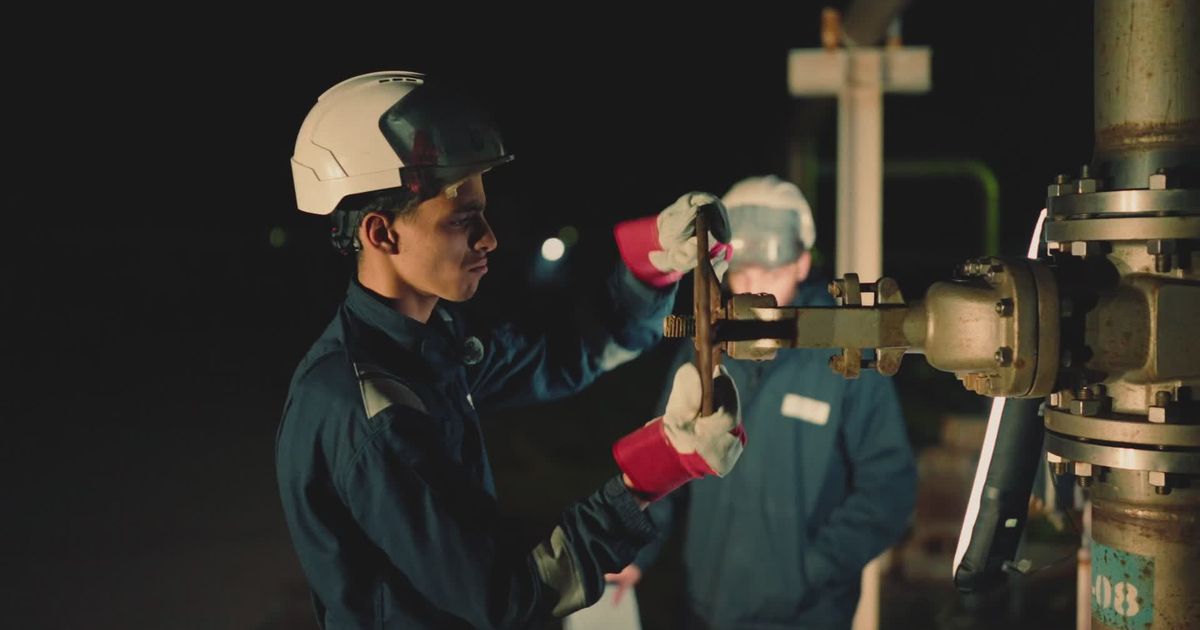
Recruiting oil and gas field workers is a speed game played on rotations, in remote basins, against constant turnover. The seat has to be covered before the next hitch, the best hands read a text and not an email, and one missed certification can stall an entire onboarding. Win it and your rigs stay crewed; lose it and a faster recruiter fills your seat with your candidate.
This is a high-volume, high-turnover, rotational-shift hiring problem, which means it rewards a system, not heroics. Below is the playbook: why the vertical is uniquely hard, why response time decides the hire, and the six steps ATS Mako turns into an automated hiring engine that answers, screens, and moves candidates the day they apply. It pairs directly with our high-volume hiring solution.
Four things a legacy pipeline gets wrong
Oil and gas hiring is not a slower version of office hiring. It has its own clock, its own channel, and its own screen.
Rotations do not wait for your inbox
Crews turn over on 14/14, 21/7, and 28/28 schedules. When a rotation ends and a hand does not come back, the seat has to be filled before the next hitch. A resume sitting unanswered in a shared inbox over the weekend is a rig short a person on Monday.
Turnover is the baseline, not the exception
Roughnecks, floorhands, operators, and field techs move between operators and service companies for a raise, a shorter drive, or a better rotation. High churn means you are always hiring, so the pipeline can never go quiet.
Your best candidates are on the wellsite, not at a desk
Field workers do not refresh their email between connections. They read a text on a break. If your first touch is an email that lands after their shift, you are already behind the recruiter who texted them.
One bad screen is a safety and cost problem
Certifications, drug and alcohol testing, and safety records are non-negotiable in the field. Screening cannot be an afterthought at offer stage. It has to be built into the pipeline before a candidate ever gets scheduled.
One pipeline, every field role
From the rig floor to the control room, the same engine captures and moves every applicant in one place.
Drilling and completions
Floorhands, roughnecks, derrickhands, drillers, motorhands, and rig crews.
Production and operations
Lease operators, pumpers, gaugers, plant operators, and control-room techs.
Field services
Frac hands, coil tubing, wireline, cementing, pressure pumping, and workover crews.
Support and skilled trades
CDL drivers, welders, electricians, instrument techs, mechanics, and safety personnel.
Directional targets for a fast field process
These are typical targets, not guaranteed outcomes. The pattern is the point: the faster and more up-front you are, the more crews you keep.
| What you measure | Slow | Good | Fast | Why it matters |
|---|---|---|---|---|
| Time to first reply | Next business day | Under 15 minutes | Under 60 seconds | A status-triggered text fires the second an application lands, even at 2am off a night shift. |
| First-touch channel | Email only | Email plus a text | Instant SMS, email backup | Field crews read texts between connections. Lead with the channel that reaches a wellsite. |
| Certification screen | At offer stage | During the phone screen | Captured at apply | Ask for certs, tickets, and testing status up front so unqualified hands never clog the pipeline. |
| Follow-up when silent | Never or manual | One nudge next day | Conditional auto sequence | A follow-up that only fires when there is no reply recovers hands between hitches without nagging. |
Six steps to hire field crews at volume
Set the trigger. We handle the rest. Each step turns a manual delay into an automated move.
Capture every applicant into one branded pipeline
Put a branded Apply Here page on your own domain and drop it into job posts, QR codes on yard flyers, texts, and social. Pull applicants from job boards and inbound email automatically so a resume from a floorhand never dies in a shared inbox. If it is not in one pipeline, it is already slow.
Text a first touch the second they apply
Status-triggered automation sends an on-brand confirmation the instant an application lands. No recruiter has to be at a desk when a night-shift hand applies at midnight. The candidate hears from you while intent is still at its peak, queued to business hours.
Screen for certs and safety up front
Ask the deal-breakers first: valid CDL, TWIC, H2S and safety tickets, and testing status. AI-powered candidate ranking and resume scoring surface qualified hands so recruiters spend their time on people who can actually pass onboarding, not on sorting.
Work every candidate from one conversational inbox
Two-way SMS lands every reply in one centralized hub instead of scattered across recruiter cell phones. When a hand texts back from the field, any recruiter can pick it up, see the full history, and keep the conversation moving.
Automate the follow-up, only when it is needed
Set conditional sequences that follow up only when there is no reply, space them across days, and stop the moment the hand responds. Persistent without pestering, so you recover candidates between rotations without a recruiter chasing every name.
Schedule, offer, and onboard without the drag
Self-serve interview scheduling ends the phone tag around a rotation. E-signature offers close the yes the day a hand decides, and onboarding collects certs, I-9, and details up front so the next hitch starts fully staffed.
What the instant text should actually say
The message that reaches a hand between connections is short, on-brand, and asks for one thing.
It fires on application, not on a recruiter
The message is tied to pipeline status, so it sends the second a hand applies, whether that is midday or the end of a night shift. No human bottleneck sits between apply and reply.
It confirms, names them, and asks one thing
A short, branded text: who you are, that you got their application, and one easy next step such as a time to talk or a yes to a quick screen. Dynamic merge fields personalize it across thousands of applicants.
It gives a clear, compliant opt-out
Every automated text carries a plain opt-out such as "Reply STOP." It keeps you on the right side of SMS rules and, counterintuitively, raises trust and reply rates.
Move at speed while you stay compliant
Texting field workers is powerful and regulated. These guardrails keep the engine fast and the process clean.
Get lawful consent, keep a clear opt-out
Outbound recruiting texts need lawful prior consent and a plain opt-out on every message. ATS Mako handles automatic unsubscribe on the SMS and email side so a STOP or an unsubscribe is honored without a manual step.
Send inside business hours
Quiet-hours protection queues texts to local business hours. Field workers on odd rotations still get your message when it can be read, and you stay compliant instead of blasting at 3am.
Protect certs and EEO language
Lockable template sections keep legal disclaimers and equal-opportunity statements intact so every recruiter and every location sends the same compliant copy. Update once, deploy everywhere.
This article is educational and not legal advice. Confirm consent, opt-out, and testing requirements with qualified counsel for your jurisdictions.
Recruiting oil and gas field workers, answered
What is the fastest way to recruit oil and gas field workers at volume?
Lead with speed and text. Capture every applicant into one branded pipeline, fire a status-triggered SMS the second they apply, and screen for certifications and testing status up front. Field crews read texts on a break, not email at a desk, so an instant, on-brand first touch keeps them engaged while faster competitors are still typing an email. Then automate a conditional follow-up that only fires when there is no reply so no candidate goes cold between rotations.
Why do oil and gas hires ghost so often?
Field workers apply to several operators and service companies at once and take the first organized, fast-moving process that reaches them. Slow follow-up, an email-only first touch, and phone tag around a rotation all read as disorganization. The fix is a fast, texted first reply and a conversational inbox so any recruiter can keep the thread moving instead of a candidate waiting on one person to call back.
How do you screen field candidates for certifications and safety at scale?
Ask the deal-breakers on the application, not at offer stage: valid CDL, TWIC, H2S and other safety tickets, and drug and alcohol testing status. AI-powered candidate ranking and resume scoring then surface the hands who clearly qualify so recruiters focus on people who can pass onboarding. Building the screen into the pipeline keeps unqualified applicants from clogging your recruiters time.
Does texting field workers comply with SMS recruiting rules?
It can and should. US SMS recruiting is regulated under TCPA, so outbound texts need lawful prior consent and a clear opt-out such as Reply STOP on every message. ATS Mako queues texts to business hours and handles automatic opt-out on both SMS and email, so you move fast without cutting corners on consent.
Can one platform handle hiring across multiple basins and locations?
Yes. Give every yard or location its own branded Apply Here page while corporate rolls up every pipeline into one report. Role-based access lets local recruiters work their own crews while leadership sees group-wide time-to-fill and coverage in one view, so you can staff the Permian and the Bakken from the same governed platform.
How does ATS Mako reduce time-to-fill for rotational shifts?
By removing the delays between steps. Instant capture, a texted first touch, up-front screening, self-serve scheduling, e-signature offers, and onboarding that collects certs early all compress the cycle so the next hitch starts fully staffed. Automation does the chasing and the confirming so recruiters spend their time closing, not coordinating.
Keep every rig crewed, every hitch
Capture, screen, and text thousands of field applicants from one branded platform that answers the day they apply. Stop recruiting. Start closing.
30-day free trial. No setup fees, no long-term contracts.