
Ceipal alternatives for IT staffing
If sourcing volume stopped being your bottleneck and candidate response time became one, here is how to evaluate what comes next - without a feature table nobody can verify.
Last reviewed: August 2026. Verify current vendor details directly with each vendor.
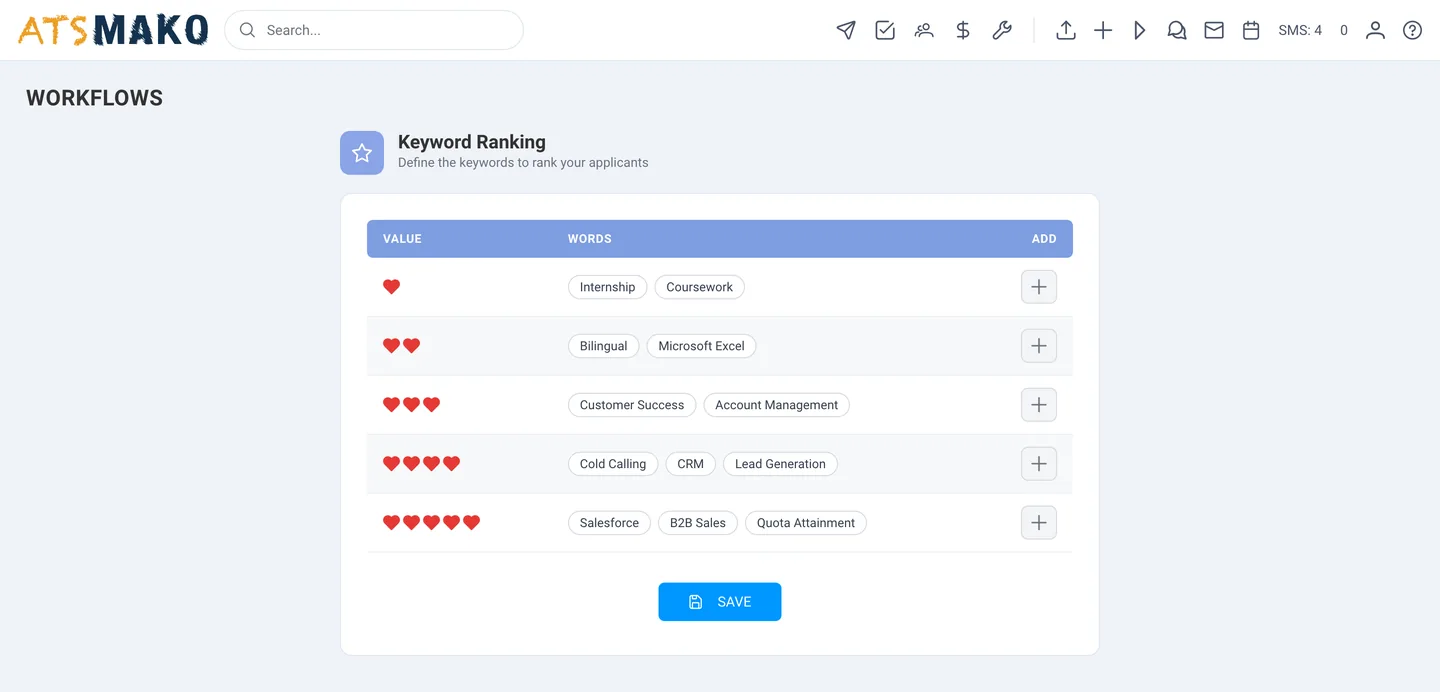
Ranked against the criteria you set for that req
Is it time to move?
If you are searching for alternatives, you already have a reason. Naming it precisely matters, because it determines whether changing platform actually solves it.
The most common gap IT staffing teams describe is this: sourcing volume is no longer the bottleneck - candidate responsiveness is. Reqs stall between submission and reply, not for lack of profiles.
If your recruiters are sourcing plenty but chasing engineers across email, LinkedIn and a personal phone, the constraint has moved from finding to reaching.
The number to check: median time from a sourced or applied candidate to first two-way contact. In contract IT, the agency that reaches a good engineer first usually owns the submission.
Six questions for every vendor on your shortlist
Ask these of Ceipal, of us, and of anyone else. Written answers to identical questions is a comparison you can trust - unlike anything a vendor writes about a rival.
Time to first contact
Ask: From application or sourcing hit to first two-way contact, what does the platform automate? Can it text a matched candidate automatically, and where does the reply land?
Why it matters: In contract IT the first vendor to reach a good engineer usually wins the submission. Minutes matter more than database size.
ATS Mako’s answer: Automated SMS and email sequences fire on stage or status change, replies thread onto the record and land in one shared inbox.
Skills matching depth
Ask: Is matching keyword-based or criteria-weighted? Can you weight primary stack, cloud, seniority, clearance and location per requisition - and see why a candidate scored the way they did?
Why it matters: A Java role is not a JavaScript role. Keyword matching buries the right engineer under near-misses.
ATS Mako’s answer: AI candidate ranking scores against per-req criteria you define, and surfaces the reasoning rather than a bare score.
Bench re-engagement
Ask: How do you segment consultants rolling off and run automated re-engagement? Is that native, or does it require exporting to a marketing tool?
Why it matters: Your bench is your margin. Contractors who go quiet at end-of-contract are the most expensive candidates you will ever re-source.
ATS Mako’s answer: Segment the bench by stack, seniority or end date, then run automated re-engagement sequences that start before the contract ends.
White-label and client-facing branding
Ask: Whose brand is on the candidate portal, the submission, the offer letter and the notification emails? What does full white-label cost?
Why it matters: If you submit to MSPs and direct clients under your own name, vendor branding in the candidate experience undercuts it.
ATS Mako’s answer: Full white-label is standard - your logo, colours and domain across portal, messaging and offers.
Pricing transparency
Ask: Ask for the all-in annual number: per-recruiter licence, implementation, migration, SMS and telephony usage, integration fees, seat minimums, and renewal uplift.
Why it matters: Per-seat headline pricing rarely predicts the real cost. Usage and implementation are where the surprises live.
ATS Mako’s answer: Our current plans and terms are published on our pricing page rather than quoted case by case.
Compliance records
Ask: Where are SMS consent and opt-out records stored, and can you produce them per candidate on demand?
Why it matters: Recruiting texting is regulated. Consent that lives in a recruiter's personal phone is not a record you can defend.
ATS Mako’s answer: Consent and opt-out state live on the candidate record, with the full message thread attached.
Three things built for contract recruiting
Reach, not just reach-out
Sourcing tools optimise for finding candidates. The harder problem in contract IT is getting a reply from a senior engineer who is already employed and already being messaged by four other agencies this week. Two-way SMS in the core, automated multi-step sequences, and AI voice screening exist to compress the gap between "we found them" and "we spoke to them".
The bench is a pipeline, not a spreadsheet
Consultants rolling off in the next 30 days are the highest-intent candidates you have, and most agencies contact them late. Segment by stack and end date, run re-engagement automatically, and the redeployment conversation starts before someone else gets there.
Margin visible before you commit
Contract IT lives on the spread between bill and pay rate. Logging both on the placement makes gross margin visible per contract, per req and per client - so you prioritise the reqs that actually earn instead of discovering the answer at invoice time.
When staying where you are is the right call
Switching is not always right. These are the cases where we would tell you to keep what you have.
Deep bench-sales and C2C workflow
If your operation is built around bench sales, vendor management and corp-to-corp submissions, those workflows are specialised. Inventory them precisely and test each one in any evaluation - workflow fit here outweighs general platform quality, whichever system you are considering.
Heavy VMS and MSP submission volume
When most reqs arrive through VMS portals, the submission path is the product. Walk that exact path in a trial before drawing conclusions.
Your sourcing stack is standardised
If your team is trained on a specific sourcing and integration set that works, the productivity cost of retraining is real and belongs in the maths.
Compliance configuration you have already built
Established EEO, I-9 and client-specific compliance configuration takes time to rebuild. Do not treat it as a rounding error in a migration plan.
Evaluation questions, answered.
Why does this page not include a feature-by-feature comparison table?
Because we cannot verify another vendor's current feature set and pricing to a standard we would be willing to publish. Capabilities change, tiers vary by contract, and many enterprise staffing platforms do not publish list pricing. A table of confident but unverified claims about a competitor is exactly why most "alternatives" pages are untrustworthy. Instead we publish the evaluation framework - the questions that genuinely separate platforms - plus our own answers in full. Put the same questions to both vendors in writing and you will get a comparison that is accurate on the day you make the decision.
Can ATS Mako match candidates on a specific tech stack?
Yes. You define the criteria per requisition - primary language and framework, cloud and CI/CD, years at seniority, clearance, location - and AI candidate ranking scores applicants and bench consultants against those weights rather than a flat keyword match. A React plus Node plus AWS req returns a shortlist that fits the stack instead of a pile of near-misses you have to read line by line.
Does it handle contract-to-hire and bill rate versus pay rate?
Yes. Build a contract-to-hire pipeline and move engineers through it stage by stage, generate a branded offer, capture e-signature, and log bill rate and pay rate on the placement so gross margin appears in reporting rolled up by requisition, recruiter and client.
How long does migrating from another ATS take?
Four to six weeks is realistic for a small to mid-size agency: one to two weeks to export and map data, a week to configure pipelines and templates, one to two weeks running parallel on live reqs, then a validation week. The biggest variable is how much historical data you insist on carrying across and how clean it is.
What typically does not survive a migration?
Core records - candidates, resumes, jobs, placements, custom fields - usually export cleanly from any modern platform. Threaded email and SMS history is the common casualty in any ATS-to-ATS move, because message threads are modelled very differently across systems. Ask your current vendor exactly what their export contains, and test it before you commit.
Is there a trial we can run with real requisitions?
Yes - a free trial is available; current terms are on our pricing page. The most informative test is to take one live contract req and run it end to end: source, rank, contact, screen and submit. Measure time from application to first two-way contact, because that is the number that decides who wins the submission.
Next steps in your evaluation
Note on vendor names. All product and company names are the trademarks of their respective owners and are used here only to identify the products a reader may be comparing. ATS Mako is not affiliated with, endorsed by, or sponsored by any other vendor referred to on this page. This page makes no representations or warranties about any other vendor’s features, pricing, performance or suitability - confirm those directly with the vendor concerned. Content is general information current as of the last-reviewed date, is not advice, and should not be relied on as the sole basis for a purchasing decision.
Test it on one live contract req.
30-day free trial. Measure time from application to first two-way contact - that is the number that wins submissions.
30-day free trial · No setup fees · No long-term contracts